 Image 1 of 3
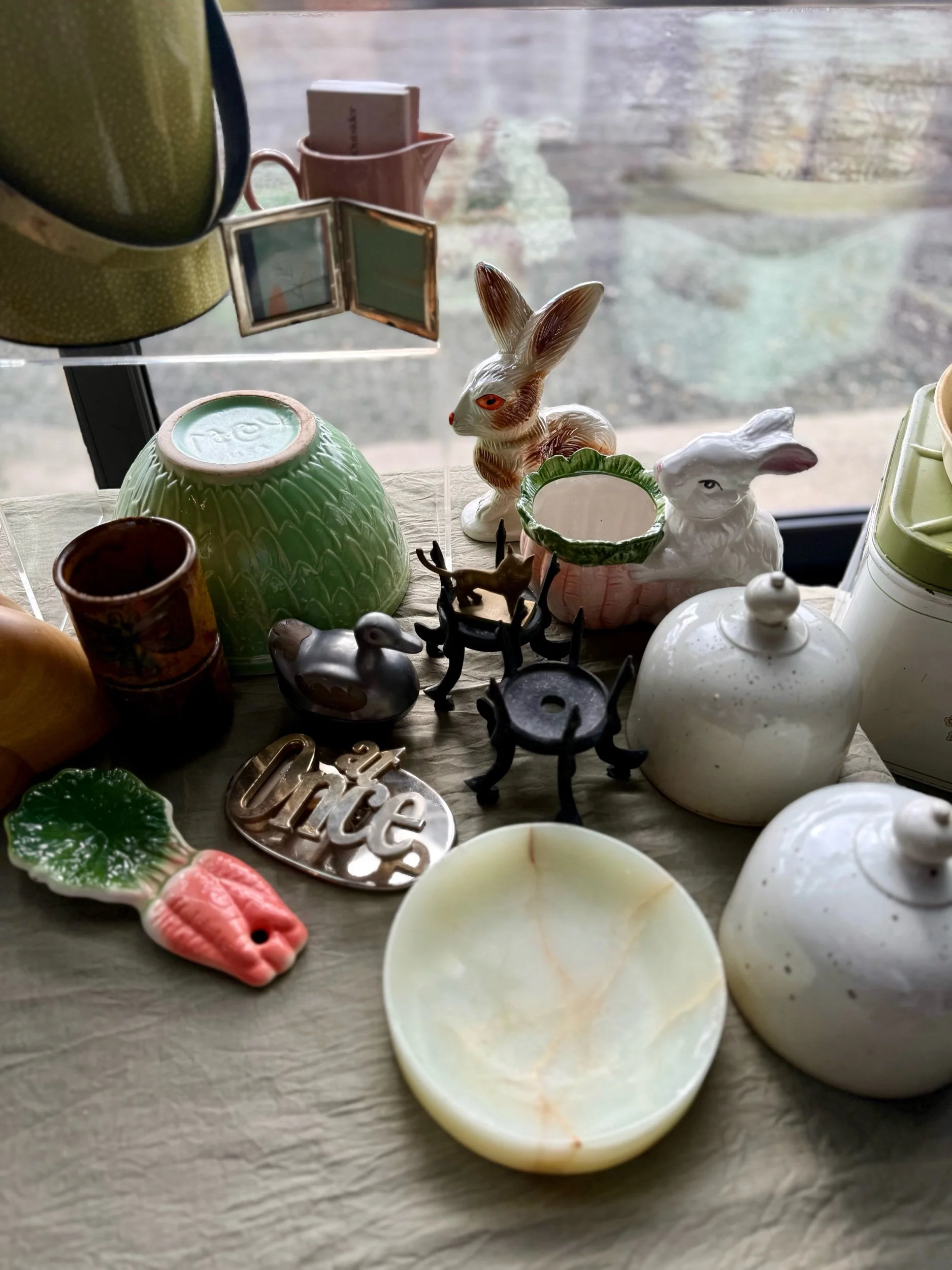 Image 2 of 3
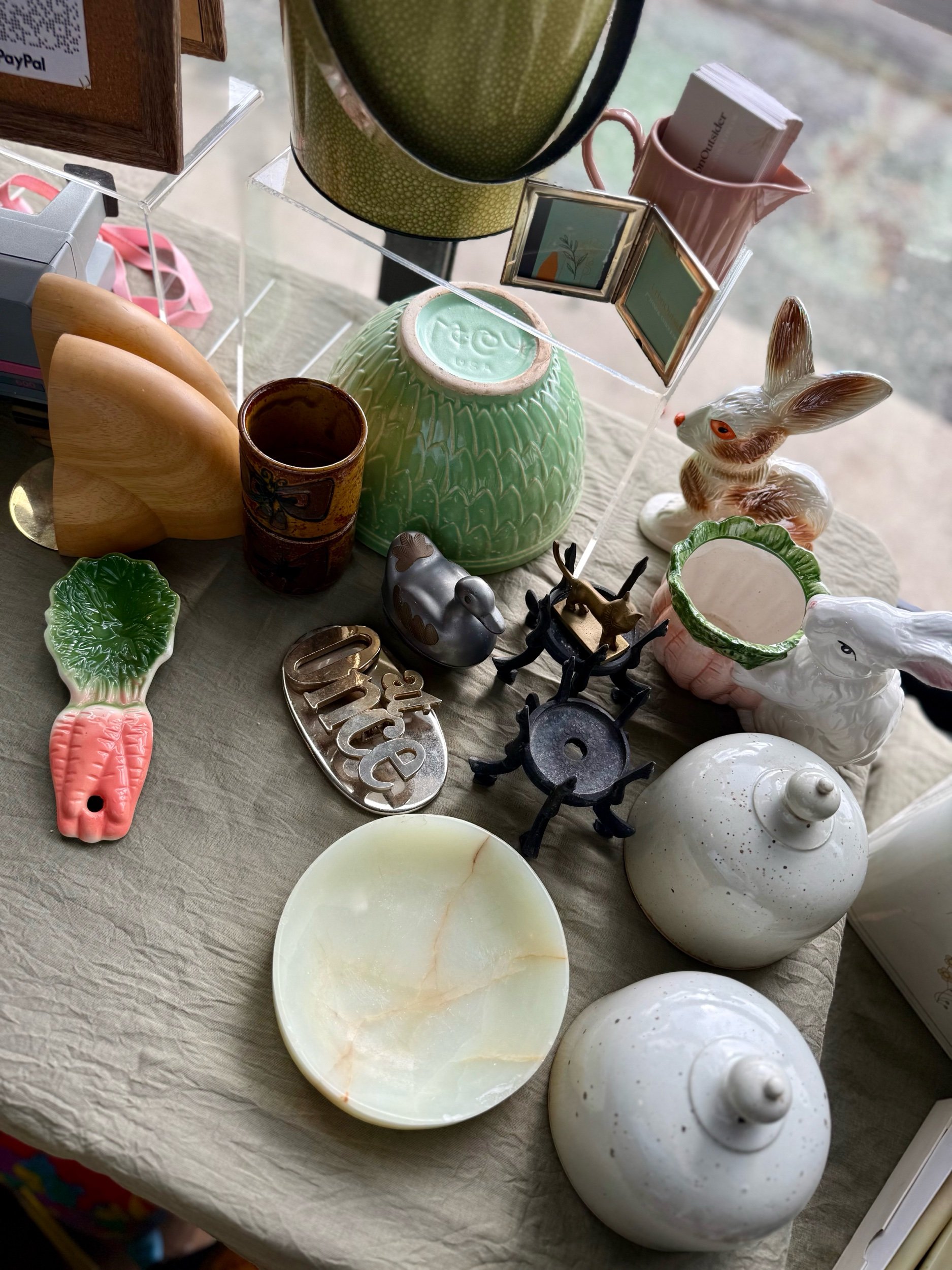 Image 3 of 3
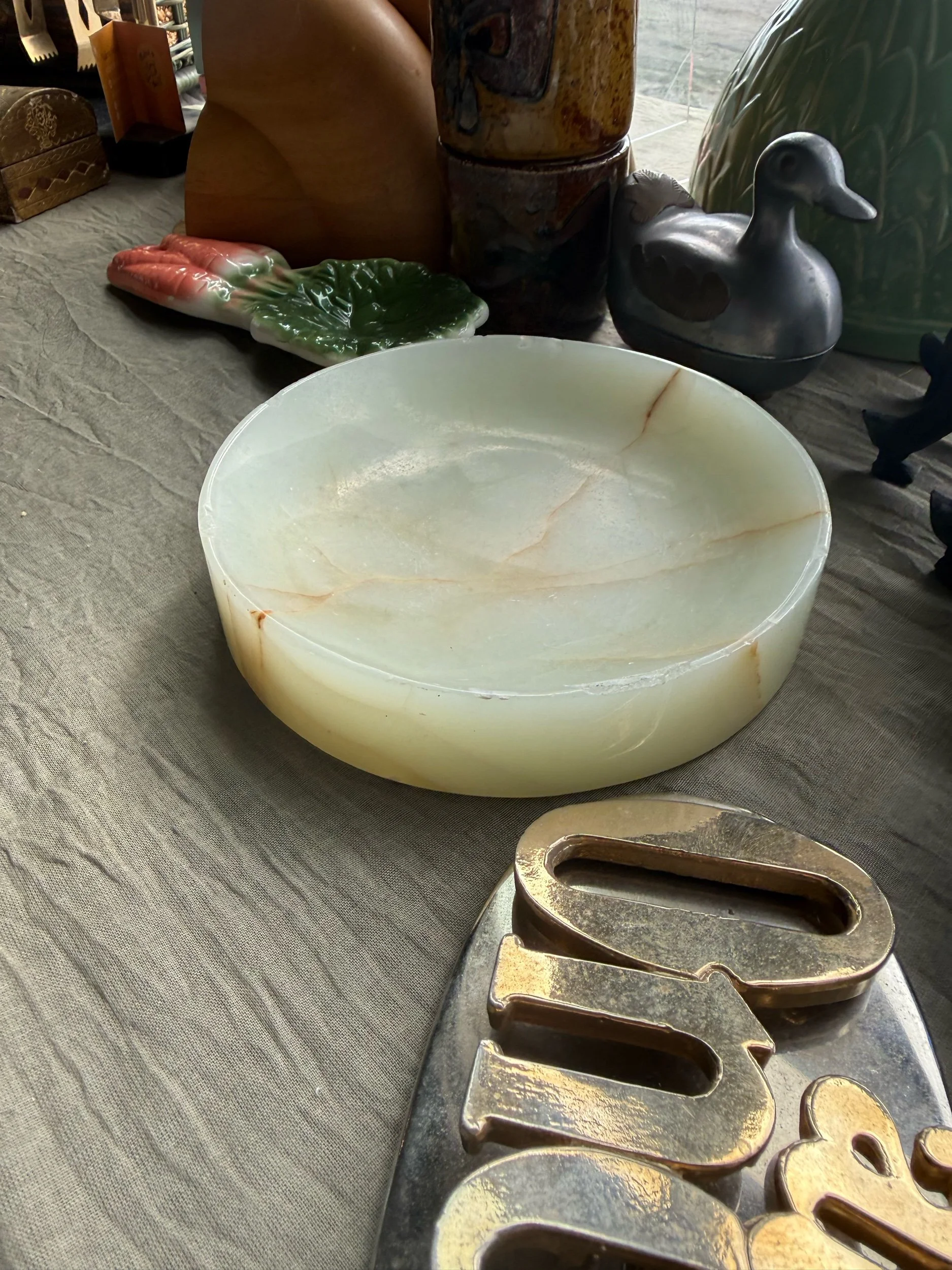
Carved from milky calcite onyx with warm rust-colored veining, this vintage stone catchall carries the quiet weight that only natural materials seem to develop over time. The shallow, sculptural form reflects the decorative stone objects that became popular throughout the 1960s–1980s — pieces chosen not only for utility, but for the way they grounded a room through texture, tone, and permanence.
Unlike modern resin reproductions or mass-produced decor designed to imitate stone, this bowl reveals the irregularity and variation that makes natural material compelling. The softly translucent body catches light with a muted glow, while the mineral veining creates organic movement across the surface. Small shifts in color and pattern make it feel less manufactured and more unearthed.
Originally the type of object often used as an ashtray, vanity dish, or entryway catchall, pieces like this have endured because they remain adaptable. It works equally well holding jewelry beside a sink, resting on a coffee table with matches or keys, or layered into shelving where the stone itself becomes part of the composition. The wear is subtle and appropriate to age, adding to the lived-in character rather than distracting from it.
Decorative stone objects like these became staples in mid-century and postmodern interiors because they introduced natural materiality into everyday ritual — functional objects that still felt collected rather than disposable.
Era: 1960s–1980s
Materials: Calcite onyx (“onyx marble”)
Color: Milky ivory with rust and caramel veining
Condition: Very good vintage condition with light wear consistent with age and use
Notes: Solid carved stone construction; originally intended as a decorative ashtray or catchall bowl
Carved from milky calcite onyx with warm rust-colored veining, this vintage stone catchall carries the quiet weight that only natural materials seem to develop over time. The shallow, sculptural form reflects the decorative stone objects that became popular throughout the 1960s–1980s — pieces chosen not only for utility, but for the way they grounded a room through texture, tone, and permanence.
Unlike modern resin reproductions or mass-produced decor designed to imitate stone, this bowl reveals the irregularity and variation that makes natural material compelling. The softly translucent body catches light with a muted glow, while the mineral veining creates organic movement across the surface. Small shifts in color and pattern make it feel less manufactured and more unearthed.
Originally the type of object often used as an ashtray, vanity dish, or entryway catchall, pieces like this have endured because they remain adaptable. It works equally well holding jewelry beside a sink, resting on a coffee table with matches or keys, or layered into shelving where the stone itself becomes part of the composition. The wear is subtle and appropriate to age, adding to the lived-in character rather than distracting from it.
Decorative stone objects like these became staples in mid-century and postmodern interiors because they introduced natural materiality into everyday ritual — functional objects that still felt collected rather than disposable.
Era: 1960s–1980s
Materials: Calcite onyx (“onyx marble”)
Color: Milky ivory with rust and caramel veining
Condition: Very good vintage condition with light wear consistent with age and use
Notes: Solid carved stone construction; originally intended as a decorative ashtray or catchall bowl